Dental Emergency or Regular Appointment? How to Know the Difference
Have you ever woken up with a painful tooth and wondered, “Do I need to see a dentist right away, or can I wait a few days?”
You’re not alone.
Dental problems don’t always come with a clear warning. A small chip might be nothing to worry about, while a sudden toothache or swelling could signal that you need prompt dental care. Knowing the difference between a dental emergency and a problem that can wait for a regular appointment can help you make the right decision.
If you’re looking for an emergency dentist in Toronto, Arlington Dental provides comprehensive dental care for patients and families. Located on St. Clair Avenue West, Arlington Dental offers a range of general, preventive, restorative, cosmetic, and emergency dental services.
So, how do you know when to call a dentist immediately?
Here are some of the most common situations.
What Is a Dental Emergency?
A dental emergency is generally a situation that requires prompt professional attention because delaying treatment could result in increasing pain, infection, further damage, or complications.
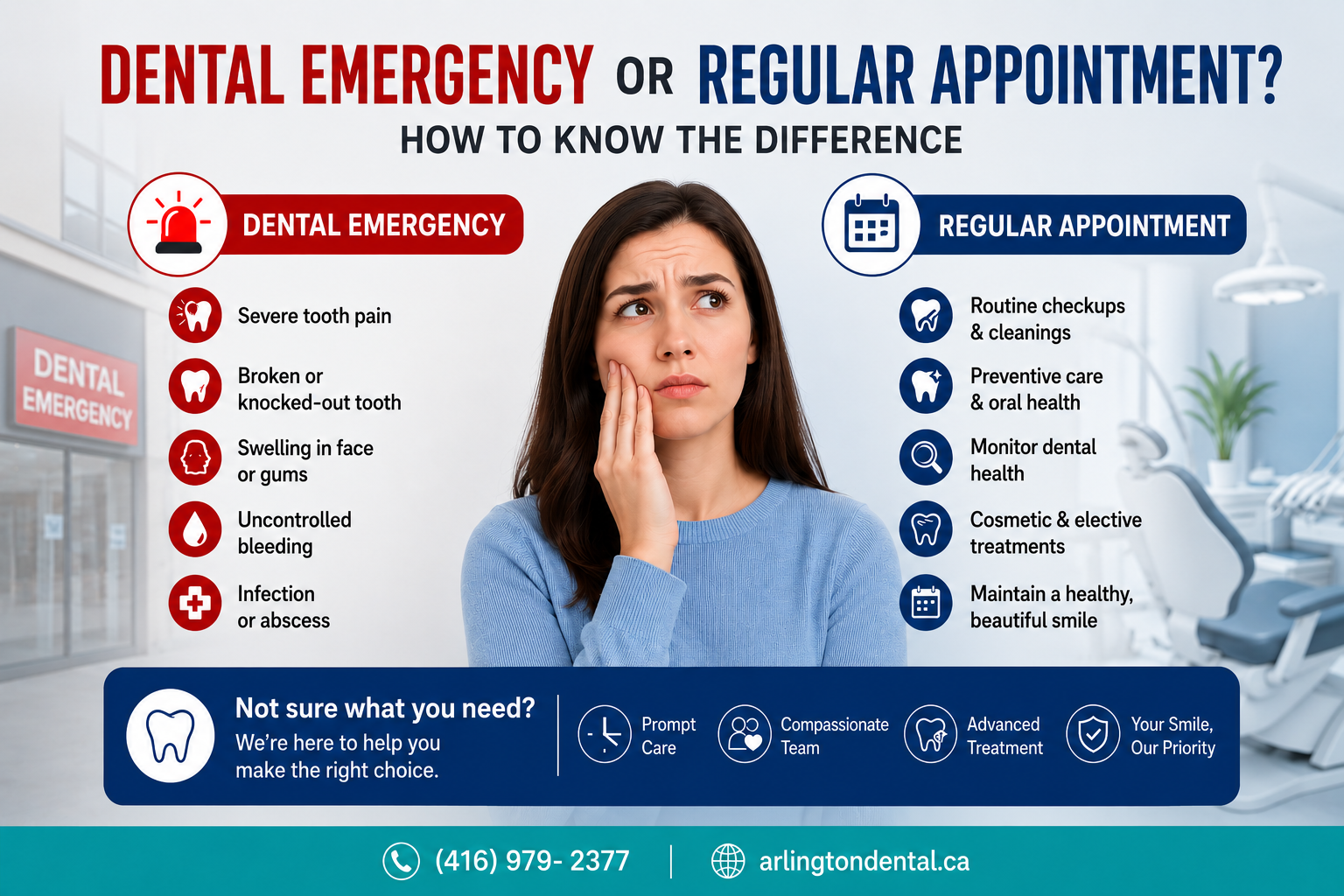
Some common dental emergencies include:
- Severe or persistent tooth pain
- Significant swelling in the mouth or face
- A knocked-out permanent tooth
- A badly broken or cracked tooth
- A dental abscess
- Uncontrolled bleeding
- A serious injury to the mouth or jaw
- A lost crown or filling accompanied by significant pain
However, not every dental problem needs an emergency appointment.
Sometimes, booking a regular dental appointment within the next few days is perfectly appropriate.
The important thing is knowing the difference.
1. Severe Tooth Pain Shouldn’t Be Ignored
A little sensitivity after eating something cold doesn’t necessarily mean you need emergency dental care.
But severe, persistent, or worsening tooth pain is a different story.
If your tooth hurts so much that you can’t sleep, eat or concentrate on your normal activities, it’s a good idea to contact a dentist as soon as possible.
Tooth pain can have many causes, including decay, an infection, a cracked tooth or damage to the inside of the tooth. Sometimes the problem may start small but become more serious if treatment is delayed.
2. Can mild tooth pain wait?
If the discomfort is mild and occasional, you may be able to schedule a regular dental appointment. However, don’t ignore recurring pain simply because it isn’t severe.
Your dentist can determine what’s causing the discomfort and recommend appropriate treatment.
3. Swelling Could Mean Something More Serious
Have you noticed swelling around your tooth, gums, jaw, or face?
Swelling should never be ignored, particularly when it occurs alongside pain.
A dental infection or abscess can cause symptoms such as:
- Swollen gums
- Facial swelling
- Tooth pain
- A bad taste in the mouth
- Pus or drainage
- Fever
- Difficulty opening your mouth
If you experience significant swelling or symptoms that are getting worse, contact a dental professional promptly.
And if swelling is affecting your ability to breathe or swallow, seek emergency medical attention immediately.
4. Did You Knock Out a Tooth?
A knocked-out permanent tooth is one situation where time really matters.
If an accident or sports injury causes a permanent tooth to come completely out, contact a dentist immediately.
Try to handle the tooth carefully and avoid touching the root. If possible, follow professional instructions for keeping the tooth protected while you make your way to the dental office.
Don’t assume that because the tooth is out, nothing can be done.
The sooner a knocked-out permanent tooth is professionally assessed, the better the chances may be of saving it.
For children, remember that a knocked-out baby tooth should generally not be placed back into the socket. Contact a dental professional for guidance.
5. What If You Break or Chip a Tooth?
Not every chipped tooth is a dental emergency.
For example, if you have a tiny chip and you’re not experiencing pain or sensitivity, you may be able to schedule a regular appointment.
But a badly broken or cracked tooth is different.
You should seek prompt dental attention if:
- The tooth is causing severe pain.
- You can see a large crack or fracture.
- The tooth is extremely sensitive.
- There is bleeding.
- A significant portion of the tooth has broken off.
- You experienced an injury to the mouth.
Depending on the condition of the tooth, your dentist may recommend restorative treatment such as bonding, a filling, or a crown.
6. Lost a Filling or Crown?
Losing a filling or crown can be worrying, but it isn’t always an emergency.
If you lose a filling and you’re comfortable, have no swelling, and aren’t experiencing significant pain, you may be able to arrange a regular appointment.
However, don’t simply forget about it.
The exposed tooth may be more vulnerable to sensitivity or further damage. Contact your dental office and explain what happened.
If you’ve lost a crown and you’re experiencing severe pain, swelling, or significant tooth damage, you should seek dental attention sooner.
7. Dental Injuries Need to Be Taken Seriously
Accidents happen.
A fall, car accident, sports injury, or unexpected impact can damage your teeth, gums or jaw.
Even if a tooth doesn’t look badly damaged, an injury can sometimes affect structures underneath the surface.
If you have experienced significant trauma and notice:
- A loose or displaced tooth
- Severe pain
- Bleeding
- Swelling
- A damaged tooth
- Jaw pain
- Difficulty opening your mouth
It’s a good idea to have the injury assessed by a dental professional.
If the injury is severe or involves difficulty breathing, swallowing, or uncontrolled bleeding, seek emergency medical care.
8. When Can You Book a Regular Dental Appointment?
Here’s the good news: not every dental concern requires an emergency visit.
Some situations can usually be handled during a regular appointment, including:
- Routine dental cleanings
- Regular checkups
- Mild tooth sensitivity
- Small, painless chips
- Teeth whitening consultations
- Cosmetic concerns
- Invisalign consultations
- Routine fillings
- Questions about your oral hygiene
That doesn’t mean these issues should be ignored.
A problem that seems minor today could become more uncomfortable later. If something about your teeth or gums has changed, it’s worth discussing with your dentist.
Dental Emergency vs. Regular Appointment: A Quick Guide
Still not sure?
Here’s a simple way to think about it:
| Dental Problem | What to Consider |
| Severe toothache | Contact a dentist promptly |
| Significant facial swelling | Seek urgent dental care |
| Knocked-out permanent tooth | Dental emergency |
| Serious mouth injury | Prompt assessment |
| Dental abscess | Urgent dental attention |
| Large broken or cracked tooth | Prompt dental care |
| Small painless chip | Regular appointment may be suitable |
| Mild occasional sensitivity | Schedule a dental examination |
| Routine cleaning | Regular appointment |
| Teeth whitening | Regular appointment |
| Invisalign consultation | Regular appointment |
| Lost filling without pain | Contact your dentist and arrange an appointment |
When in doubt, it’s always better to call your dental office and explain your symptoms. The dental team can help you understand what to do next.
What Should You Do During a Dental Emergency?
When something unexpected happens, it’s easy to panic.
Try to stay calm and take things one step at a time.
First, assess what happened.
Ask yourself:
- How severe is the pain?
- Is there swelling?
- Is there bleeding?
- Was a tooth knocked out?
- Is the tooth broken?
- Did you experience an injury?
- Are your symptoms getting worse?
Next, contact a dental professional.
Explain exactly what happened and describe your symptoms. Don’t worry if you’re unsure whether it’s a true emergency. That’s what your dental team is there to help with.
If your symptoms are severe or involve significant swelling, trauma, or infection, don’t delay seeking professional care.
Why Having a Toronto Dentist You Trust Matters
Dental emergencies have a way of happening when you least expect them.
That’s why having a dental clinic you already know can make the situation less stressful. Instead of searching for a dentist while you’re in pain, you’ll already know who to contact.
For patients in Toronto, choosing a conveniently located dental clinic can also make regular checkups and unexpected dental visits easier to manage.
Arlington Dental provides dental care from its St. Clair Avenue West location in Toronto, offering services for families and patients with a wide range of dental needs.
Whether you need a routine checkup, restorative treatment, or help with an unexpected dental problem, having an established relationship with your dentist can make it easier to get the right care.
How Can You Prevent Dental Emergencies?
Of course, not every dental emergency can be prevented. Accidents can happen.
However, taking care of your teeth regularly can reduce the risk of some common dental problems.
Keep up with regular checkups
Don’t wait until something hurts before visiting your dentist. Routine examinations allow potential problems to be identified earlier.
Brush and floss consistently
Good oral hygiene helps reduce plaque buildup and supports healthier teeth and gums.
Protect your teeth during sports
If you participate in contact sports, ask your dentist about an appropriate mouthguard.
Don’t use your teeth as tools
Opening packages or bottles with your teeth may seem convenient, but it can lead to chips and fractures.
Be careful with very hard foods
Chewing ice and extremely hard foods can increase the risk of damaging teeth.
Don’t ignore small problems
A little sensitivity or occasional discomfort may seem unimportant, but recurring symptoms are worth discussing with your dentist.
Regular Dental Visits Can Help You Stay Ahead
One of the easiest ways to reduce unexpected dental problems is to stay consistent with preventive care.
During regular visits, your dentist can monitor your teeth and gums and identify concerns before they become more complicated.
For example, a small cavity may be easier to treat before it progresses. Similarly, early signs of gum problems can be addressed before they develop into more serious concerns.
Regular dental care isn’t just about fixing problems. It’s about staying ahead of them.
When Should You Call an Emergency Dentist in Toronto?
If you’re experiencing severe pain, significant swelling, a dental injury, a knocked-out permanent tooth, an abscess, or another rapidly worsening dental problem, contact a dental professional promptly.
If you’re unsure whether your situation qualifies as a dental emergency, don’t try to diagnose the problem yourself.
Call your dentist, describe your symptoms, and ask what they recommend.
For patients looking for an emergency dentist in Toronto, Arlington Dental can help assess your dental concerns and recommend the appropriate next step.
Frequently Asked Questions
Is every toothache a dental emergency?
No. Mild and occasional discomfort may not require emergency treatment. However, severe, persistent, or worsening pain should be assessed promptly.
Should I see an emergency dentist for a chipped tooth?
It depends on the extent of the damage. A small, painless chip may be treated during a regular appointment, while a large fracture, severe pain, or significant injury may require urgent attention.
What should I do if my permanent tooth gets knocked out?
Contact a dentist immediately. Handle the tooth carefully, avoid touching the root, and follow professional instructions for preserving it until you receive dental care.
Can a lost filling wait?
If there is no pain or swelling, you may be able to arrange a regular appointment. However, contact your dentist so the tooth can be assessed and repaired.
When should I seek emergency dental care in Toronto?
Severe tooth pain, significant swelling, dental infections, serious injuries, knocked-out permanent teeth, and badly damaged teeth can require urgent dental attention.
Need a Dentist in Toronto?
Not every dental problem is an emergency, but every dental problem deserves attention.
If you’re experiencing severe pain, swelling, a dental injury, or another concerning symptom, don’t wait and hope it disappears. Contact a dental professional and explain what’s happening.
And for everyday dental concerns, regular checkups remain one of the best ways to protect your smile and catch problems early.
Arlington Dental provides comprehensive dental care for patients and families in Toronto, including preventive, restorative, cosmetic, and emergency dental services.
If you’re looking for a dental clinic in Toronto that you can turn to for both routine care and unexpected dental concerns, Arlington Dental is here to help.
Book your appointment today and take the next step toward a healthier smile.