How Do You Know If Your Wisdom Teeth Need Removal?
Wisdom teeth don’t always cause problems—but when they do, they can lead to pain, infection, and damage to surrounding teeth. Knowing the signs that your wisdom teeth may need removal can help you protect your oral health and avoid more serious complications. If you’re experiencing discomfort in the back of your mouth, it may be time to visit your dentist for an evaluation.
At Arlington Dental, we help patients in Toronto monitor and manage wisdom teeth to ensure healthy smiles at every stage of life.
What Are Wisdom Teeth?
Wisdom teeth, also known as third molars, are the last set of teeth to develop. Most people have four wisdom teeth—two on the top and two on the bottom—and they typically emerge between the ages of 17 and 25.
While some people have enough room in their mouths for wisdom teeth to erupt properly, many do not. When there isn’t enough space, wisdom teeth can become impacted or grow at an angle, leading to various dental problems.
Why Do Wisdom Teeth Cause Problems?
Our ancestors had larger jaws and relied on tougher foods that caused more tooth wear over time. Today, our diets and jaw sizes have evolved, leaving less room for wisdom teeth.
As a result, wisdom teeth often:
- Become trapped beneath the gums
- Grow sideways
- Push against neighboring teeth
- Partially erupt through the gums
- Increase the risk of infection and decay
Not all wisdom teeth require removal, but regular dental exams can help determine whether extraction is necessary.
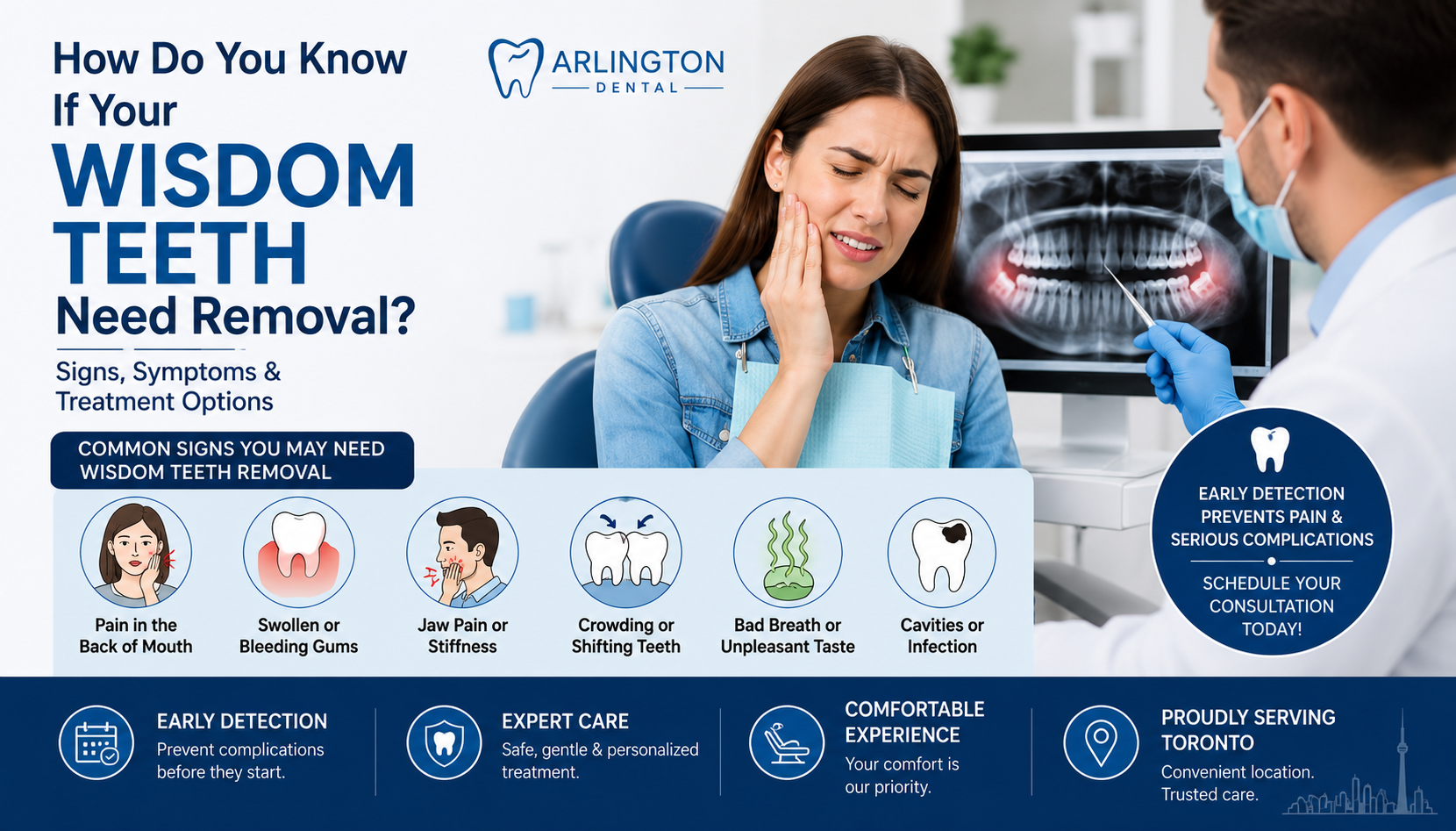
Signs Your Wisdom Teeth May Need Removal
1. Persistent Pain in the Back of Your Mouth
One of the most common signs of problematic wisdom teeth is pain or discomfort near the back of the jaw.
You may notice:
- Aching pain
- Pressure in the jaw
- Tender gums
- Pain while chewing
Pain can be constant or intermittent and may worsen as wisdom teeth continue to erupt.
If you experience ongoing discomfort, it’s important to schedule a dental evaluation.
2. Swollen or Bleeding Gums
Wisdom teeth that partially erupt through the gums can create pockets where bacteria accumulate. This often leads to inflammation and infection.
Symptoms may include:
- Red or swollen gums
- Bleeding while brushing
- Tenderness near the wisdom teeth
- Difficulty cleaning the area
Healthy gums should not bleed regularly. Persistent swelling or bleeding may indicate an underlying issue requiring treatment.
3. Jaw Pain or Stiffness
Impacted wisdom teeth can place pressure on surrounding structures, causing jaw pain and stiffness.
You may experience:
- Difficulty opening your mouth
- Jaw soreness
- Pain near the ears
- Clicking or discomfort while chewing
Ignoring jaw pain may allow the problem to worsen over time.
4. Frequent Headaches
Many people are surprised to learn that wisdom teeth can contribute to headaches.
When wisdom teeth push against neighboring teeth, they may create pressure within the jaw and surrounding muscles. This pressure can sometimes trigger headaches or facial discomfort.
If headaches occur alongside dental pain, wisdom teeth may be contributing to the issue.
5. Crowding or Shifting Teeth
If your teeth suddenly seem more crowded, wisdom teeth may be to blame.
As wisdom teeth erupt, they can exert pressure on adjacent teeth and potentially affect alignment.
This is especially concerning for patients who have had orthodontic treatment, such as braces or clear aligners.
Signs of crowding include:
- Teeth overlapping
- Changes in bite alignment
- Difficulty flossing between teeth
A dental examination can determine whether wisdom teeth are impacting your smile.
6. Repeated Infections Around the Wisdom Teeth
Partially erupted wisdom teeth create spaces where food particles and bacteria can become trapped.
This condition, known as pericoronitis, can cause:
- Pain
- Swelling
- Bad breath
- Difficulty swallowing
- Infection
Repeated infections often indicate that wisdom tooth extraction may be the best long-term solution.
7. Bad Breath or Unpleasant Taste
Persistent bad breath may sometimes be linked to wisdom teeth.
Bacteria trapped around partially erupted teeth can lead to:
- Chronic bad breath
- Unpleasant taste in the mouth
- Gum infections
Even with good oral hygiene, these symptoms may continue until the underlying issue is addressed.
8. Cavities in Hard-to-Reach Areas
Wisdom teeth are located at the very back of the mouth, making them difficult to clean effectively.
This increases the risk of:
- Tooth decay
- Gum disease
- Cavities in neighboring molars
In some cases, dentists recommend removing wisdom teeth to prevent damage to surrounding healthy teeth.
9. Cysts or Damage to Nearby Teeth
Impacted wisdom teeth can sometimes form cysts—fluid-filled sacs that develop around the tooth.
If left untreated, cysts may:
- Damage the jawbone
- Affect nearby teeth
- Lead to more extensive treatment
Regular dental X-rays help detect these problems early before significant damage occurs.
What Is an Impacted Wisdom Tooth?
An impacted wisdom tooth does not fully erupt through the gums.
There are several types of impaction:
Soft Tissue Impaction
The tooth partially emerges but remains covered by gum tissue.
Partial Bony Impaction
The tooth is partially trapped in the jawbone.
Complete Bony Impaction
The tooth remains entirely embedded within the jawbone.
Horizontal Impaction
The tooth grows sideways toward neighboring teeth.
Impacted wisdom teeth often require extraction to prevent future complications.
Do All Wisdom Teeth Need to Be Removed?
No. Not everyone needs wisdom tooth extraction.
Wisdom teeth may remain if they are:
- Fully erupted
- Properly aligned
- Easy to clean
- Free of decay or gum disease
- Not affecting neighboring teeth
Your dentist will evaluate your oral health using clinical examinations and dental X-rays to determine the best course of action.
How Dentists Determine If Wisdom Teeth Should Be Removed
During your dental visit, your dentist may:
Perform a Clinical Examination
They will check for:
- Swelling
- Gum inflammation
- Signs of infection
- Tooth alignment
Take Dental X-Rays
X-rays allow dentists to see:
- Tooth position
- Impaction
- Root development
- Proximity to nerves
- Potential damage to adjacent teeth
These diagnostic tools help create a personalized treatment plan.
What Happens During Wisdom Tooth Removal?
Many patients feel nervous about wisdom tooth extraction, but the procedure is common and routine.
The process generally includes:
- Administering local anesthesia or sedation
- Accessing the tooth if impacted
- Removing the tooth carefully
- Placing stitches if necessary
- Providing aftercare instructions
Most procedures are completed in a single appointment.
Wisdom Tooth Recovery: What to Expect
Recovery varies by patient but generally lasts several days.
After extraction, you may experience:
- Mild swelling
- Tenderness
- Minor bleeding
- Temporary discomfort
To support healing:
- Apply ice packs
- Eat soft foods
- Avoid smoking
- Follow your dentist’s instructions
- Keep the area clean
Most patients return to normal activities within a few days.
Risks of Delaying Wisdom Tooth Removal
Postponing treatment when wisdom teeth are causing problems can lead to:
- Infections
- Tooth decay
- Gum disease
- Damage to neighboring teeth
- Cysts
- Chronic pain
Early evaluation often allows for simpler treatment and faster recovery.
Tips for Keeping Wisdom Teeth Healthy
Even if your wisdom teeth do not currently require removal, maintaining good oral hygiene is essential.
Be sure to:
- Brush twice daily
- Floss carefully around back molars
- Attend routine dental checkups
- Schedule regular dental cleanings
- Report any pain or swelling promptly
Preventive care plays an important role in maintaining lifelong oral health.
When Should You See a Dentist?
You should schedule a dental appointment if you experience:
- Pain near the back of your mouth
- Swollen or bleeding gums
- Difficulty chewing
- Jaw stiffness
- Persistent bad breath
- Recurrent infections
Early diagnosis can prevent complications and help preserve your oral health.
Protect Your Smile with Expert Dental Care
Wisdom teeth don’t always need removal—but when they cause pain, infection, crowding, or damage to nearby teeth, timely treatment can protect your long-term oral health.
At Arlington Dental, our team is committed to providing comprehensive dental care for patients of all ages. Whether you need an evaluation, preventive care, or wisdom tooth management, we’re here to help you maintain a healthy and confident smile.
If you’re experiencing symptoms related to wisdom teeth, schedule an appointment today and let our experienced team guide you toward the best treatment for your oral health.