10 Signs It’s Time to Book a Dental Checkup
Your oral health plays a bigger role in your overall well-being than most people realize. While many people only visit the dentist when they experience pain, regular dental checkups are essential for preventing problems before they become serious. In many cases, your mouth gives early warning signs that shouldn’t be ignored.
At Arlington Dental, we believe preventive care is the key to maintaining a healthy, confident smile for years to come. Whether it’s been six months or several years since your last appointment, knowing when to schedule a dental visit can help protect your teeth, gums, and overall health.
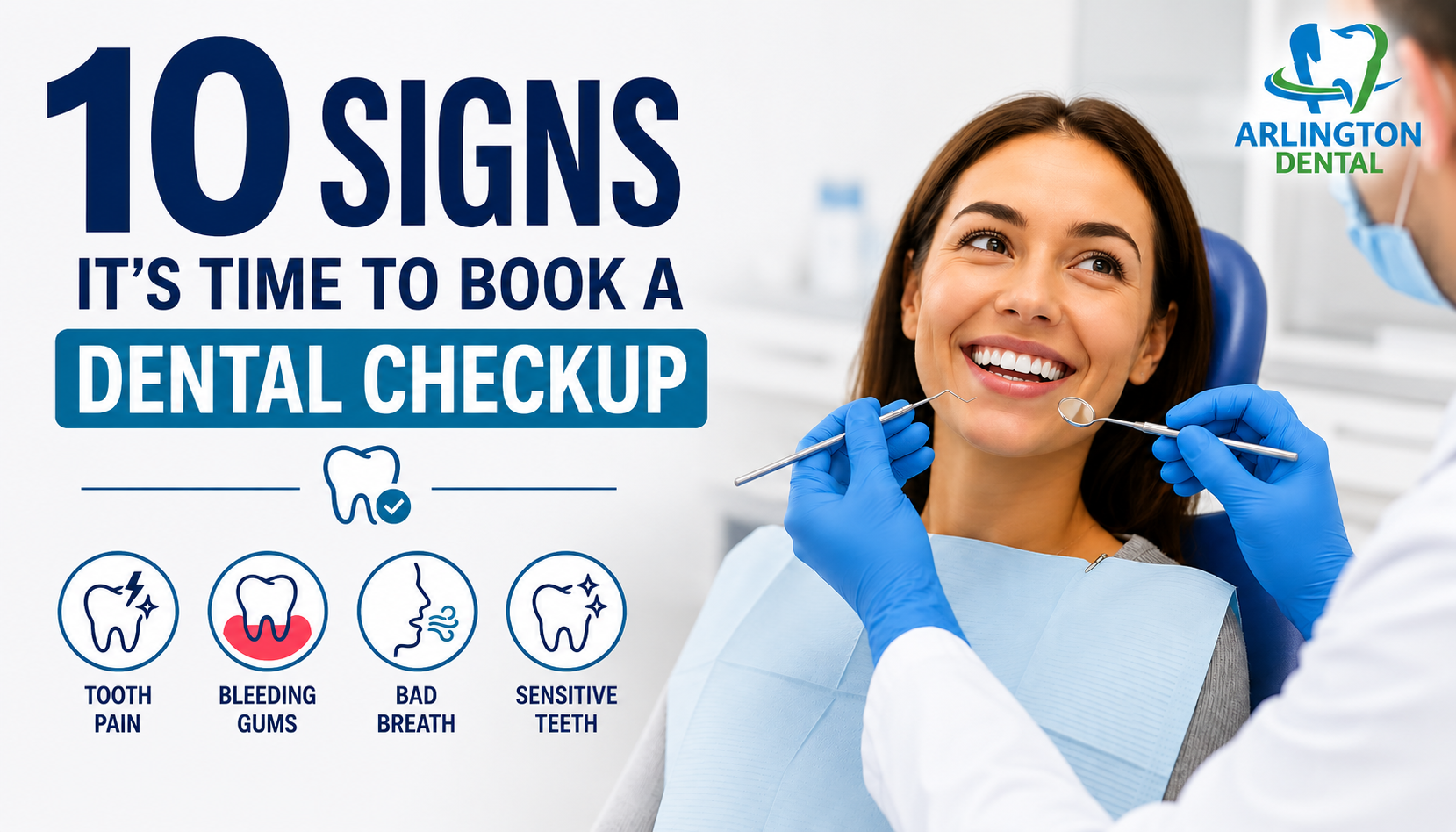
Here are 10 important signs it’s time to book a dental checkup.
1. Persistent Tooth Pain or Sensitivity
Tooth pain is one of the clearest indicators that something may be wrong. While occasional sensitivity to hot or cold foods can happen, persistent discomfort should never be ignored.
You may notice:
- Sharp pain while eating or drinking
- Throbbing discomfort that comes and goes
- Sensitivity to sweets
- Pain when biting down
These symptoms could indicate cavities, enamel erosion, infections, cracked teeth, or even nerve damage. The sooner a dentist identifies the problem, the easier and less expensive treatment often becomes.
Delaying treatment can allow minor issues to progress into serious dental conditions that may require root canals, crowns, or extractions.
2. Bleeding or Swollen Gums
Healthy gums should not bleed regularly when you brush or floss. If you notice blood in the sink or your gums appear swollen, tender, or red, it could be an early sign of gum disease.
Gum disease often starts as gingivitis, which is reversible when treated early. Without treatment, it can progress into periodontitis — a more serious condition that can lead to gum recession, bone loss, and tooth loss.
Common warning signs include:
- Bleeding while brushing
- Puffy or inflamed gums
- Persistent bad breath
- Gum tenderness
- Receding gums
Regular dental checkups help detect gum disease early before long-term damage occurs.
3. Chronic Bad Breath
Bad breath happens occasionally to everyone, especially after certain foods. However, persistent bad breath that doesn’t improve with brushing or mouthwash could signal a deeper issue.
Halitosis may be caused by:
- Gum disease
- Tooth decay
- Oral infections
- Dry mouth
- Plaque buildup
Sometimes, bacteria trapped beneath the gum line are responsible for unpleasant odors. A professional cleaning and dental evaluation can identify the underlying cause and restore fresh breath.
4. You Haven’t Seen a Dentist in Over Six Months
Even if your teeth feel perfectly fine, routine checkups are still necessary. Many dental problems develop silently and may not cause noticeable symptoms until they become advanced.
Professional dental visits help:
- Remove hardened plaque and tartar
- Detect cavities early
- Screen for gum disease
- Identify signs of oral cancer
- Monitor existing dental work
Most patients benefit from checkups every six months, although some individuals may require more frequent visits depending on their oral health needs.
Preventive care is always easier — and more affordable — than treating major dental issues later.
5. Tooth Discoloration or Staining
Changes in tooth color can happen gradually over time. While some staining is cosmetic, discoloration can also indicate underlying dental concerns.
You might notice:
- Yellowing teeth
- Brown or dark spots
- White patches
- Uneven discoloration
These changes may result from:
- Plaque buildup
- Cavities
- Smoking
- Coffee or tea consumption
- Enamel erosion
A dental checkup can determine whether the issue is purely cosmetic or related to tooth decay or enamel damage. Professional cleanings and whitening treatments can also help restore your smile’s brightness.
6. Dry Mouth or Constant Thirst
Saliva is essential for protecting your teeth and gums. It helps wash away bacteria, neutralize acids, and prevent decay. If your mouth constantly feels dry, it may increase your risk of cavities and gum disease.
Dry mouth can be linked to:
- Certain medications
- Dehydration
- Stress
- Smoking
- Medical conditions
People with chronic dry mouth often experience:
- Difficulty swallowing
- Bad breath
- Increased cavities
- Mouth sores
A dentist can help identify the cause and recommend treatments to improve oral moisture and reduce damage to your teeth.
7. Loose Teeth or Changes in Your Bite
Adult teeth should never feel loose. If you notice movement in a tooth or changes in how your teeth fit together when you bite, it’s important to seek dental care promptly.
Possible causes include:
- Advanced gum disease
- Bone loss
- Teeth grinding
- Trauma or injury
Ignoring loose teeth can lead to worsening damage and possible tooth loss. Early intervention may help preserve your natural teeth and prevent more extensive treatment.
8. Jaw Pain, Headaches, or Teeth Grinding
Frequent headaches, jaw discomfort, or facial tension may actually be connected to your oral health.
Teeth grinding (bruxism) and jaw clenching can place excessive pressure on your teeth and jaw joints, leading to:
- Worn enamel
- Cracked teeth
- Jaw pain
- Morning headaches
- TMJ disorders
Many people grind their teeth during sleep without realizing it. During a dental exam, your dentist can identify signs of grinding and recommend solutions such as custom night guards or stress-reduction strategies.
9. Difficulty Eating or Chewing
Pain or discomfort while chewing is not normal and may indicate underlying dental problems.
You may experience:
- Sharp pain when biting
- Sensitivity while eating
- Trouble chewing certain foods
- Avoiding one side of your mouth
Potential causes include:
- Tooth decay
- Cracked teeth
- Infections
- Damaged fillings
- Gum disease
A dental evaluation can pinpoint the issue and restore comfort while eating.
10. Visible Changes in Your Mouth
Your mouth can reveal signs of health problems that should never be ignored. If you notice unusual sores, lumps, patches, or changes inside your mouth, schedule a dental checkup as soon as possible.
Watch for:
- Mouth sores that don’t heal
- White or red patches
- Swelling
- Unexplained lumps
- Changes in tongue appearance
These symptoms may indicate infections, irritation, or more serious conditions such as oral cancer. Routine dental exams include oral cancer screenings, helping detect abnormalities early when treatment is most effective.
Why Preventive Dental Care Matters
Many dental problems are easier to treat in their early stages. Unfortunately, people often wait until they experience severe pain before visiting the dentist, which can lead to more complex and costly procedures.
Preventive dentistry offers several benefits:
- Early detection of oral health problems
- Lower treatment costs over time
- Reduced risk of tooth loss
- Improved overall health
- Better appearance and confidence
Studies continue to show strong connections between oral health and overall health conditions such as diabetes, heart disease, and inflammation. Maintaining healthy teeth and gums supports your entire body.
What Happens During a Dental Checkup?
If you’ve been avoiding the dentist due to anxiety or uncertainty, understanding the process can help you feel more comfortable.
A typical dental checkup may include:
- Professional teeth cleaning
- Plaque and tartar removal
- Digital X-rays if needed
- Examination of teeth and gums
- Oral cancer screening
- Evaluation of existing dental work
Your dentist may also discuss:
- Brushing and flossing habits
- Diet and oral health
- Cosmetic concerns
- Preventive treatments
Modern dental technology makes appointments faster, more comfortable, and more effective than ever before.
How Often Should You Visit the Dentist?
For most patients, visiting the dentist every six months is recommended. However, some people may need more frequent checkups, including those with:
- Gum disease
- Diabetes
- Smoking habits
- Frequent cavities
- Orthodontic appliances
- Weakened immune systems
Your dentist can recommend a personalized schedule based on your oral health needs.
Don’t Wait Until It Becomes an Emergency
One of the biggest mistakes people make is postponing dental care until pain becomes unbearable. By that point, treatment is often more complicated than it would have been earlier.
If you’re experiencing any of these warning signs, it’s time to prioritize your oral health and schedule a professional evaluation.
At Arlington Dental, our team is committed to providing comfortable, compassionate dental care for patients of all ages. Whether you need a routine cleaning, preventive care, or treatment for a specific concern, we’re here to help you maintain a healthy smile with confidence.
Book your dental checkup today and take the first step toward better oral health.