
How Long Do Dental Fillings or Crowns Last?
Dental restorations like fillings and crowns are essential tools in maintaining healthy teeth, repairing damage, and restoring your smile. But one of the most common questions we hear at Arlington Dental is: “How long will my filling or crown last?”
The answer isn’t one-size-fits-all. The lifespan of these dental restorations depends on several factors, including the material used, your oral hygiene habits, and how you use your teeth. Understanding the durability of fillings and crowns can help you care for them properly and avoid unnecessary replacements.
How Long Do Dental Fillings Last?
Fillings are used to restore teeth affected by cavities or minor fractures. They fill the space left by decay and help protect the tooth from further damage.
Types of Fillings
The lifespan of a filling depends largely on the material used:
- Amalgam Fillings (Silver Fillings)
- Made of a durable mixture of metals, including silver, mercury, and tin.
- Known for their strength, especially in back teeth where chewing pressure is highest.
- Average lifespan: 10–15 years, sometimes longer with excellent care.
- Composite Fillings (Tooth-Colored Fillings)
- Made of resin that matches your natural tooth color.
- More aesthetically pleasing and suitable for front teeth or visible areas.
- Average lifespan: 5–10 years, depending on location and oral habits.
- Glass Ionomer Fillings
- Often used for children or areas with minimal chewing stress.
- Release fluoride, which can help prevent further decay.
- Average lifespan: 3–7 years.
Factors Affecting Filling Longevity
- Oral hygiene: Brushing twice a day, flossing daily, and visiting your dentist regularly helps prevent decay around the filling.
- Chewing habits: Chewing hard foods, ice, or using your teeth as tools can wear down or crack fillings faster.
- Location of the filling: Fillings on back teeth endure more pressure and may wear faster than those on front teeth.
- Material quality and placement: Properly placed fillings using high-quality materials last longer.
Tip: Regular dental checkups allow your dentist to monitor fillings for wear or leaks before they become a bigger problem.
How Long Do Dental Crowns Last?
Crowns are used to cover a tooth entirely, restoring strength, function, and appearance. They are often recommended for teeth that are broken, heavily decayed, or have undergone a root canal.
Types of Crowns
- Porcelain-Fused-to-Metal (PFM) Crowns
- Strong metal base with porcelain coating for a natural look.
- Average lifespan: 10–15 years.
- All-Ceramic or All-Porcelain Crowns
- Entirely tooth-colored, highly aesthetic, and suitable for front teeth.
- Average lifespan: 10–15 years, sometimes longer with proper care.
- Metal Crowns (Gold or Other Alloys)
- Extremely durable and resistant to wear.
- Average lifespan: 20+ years.
Factors Affecting Crown Longevity
- Oral hygiene: Plaque buildup at the gumline can cause decay or gum disease, affecting the crown’s support.
- Bite and teeth grinding: Clenching or grinding (bruxism) can shorten the lifespan of crowns. A nightguard can help protect them.
- Material choice: Stronger metals last longer, while purely aesthetic materials may be less durable under heavy chewing.
- Underlying tooth condition: If the tooth beneath the crown decays or fractures, the crown may need to be replaced sooner.
Tip: Crowns require the same care as natural teeth — brush, floss, and visit your dentist regularly. Avoid biting hard objects that could damage the crown.
Signs You May Need a Replacement
Whether it’s a filling or crown, there are common signs that your dental restoration may need attention:
- Tooth sensitivity or pain
- Visible cracks, chips, or wear
- Dark lines or discoloration around the edge of the restoration
- Rough or uneven surfaces
- Decay around or under a filling or crown
If you notice any of these symptoms, it’s important to schedule an appointment with Arlington Dental promptly. Early intervention can prevent more extensive treatment.
Tips for Making Fillings and Crowns Last Longer
- Brush twice a day with fluoride toothpaste.
- Floss daily to remove plaque between teeth.
- Limit sugary and acidic foods that can cause decay.
- Avoid chewing ice, hard candies, or non-food objects.
- Wear a nightguard if you grind or clench your teeth.
- Visit your dentist every six months for checkups and professional cleanings.
The Takeaway
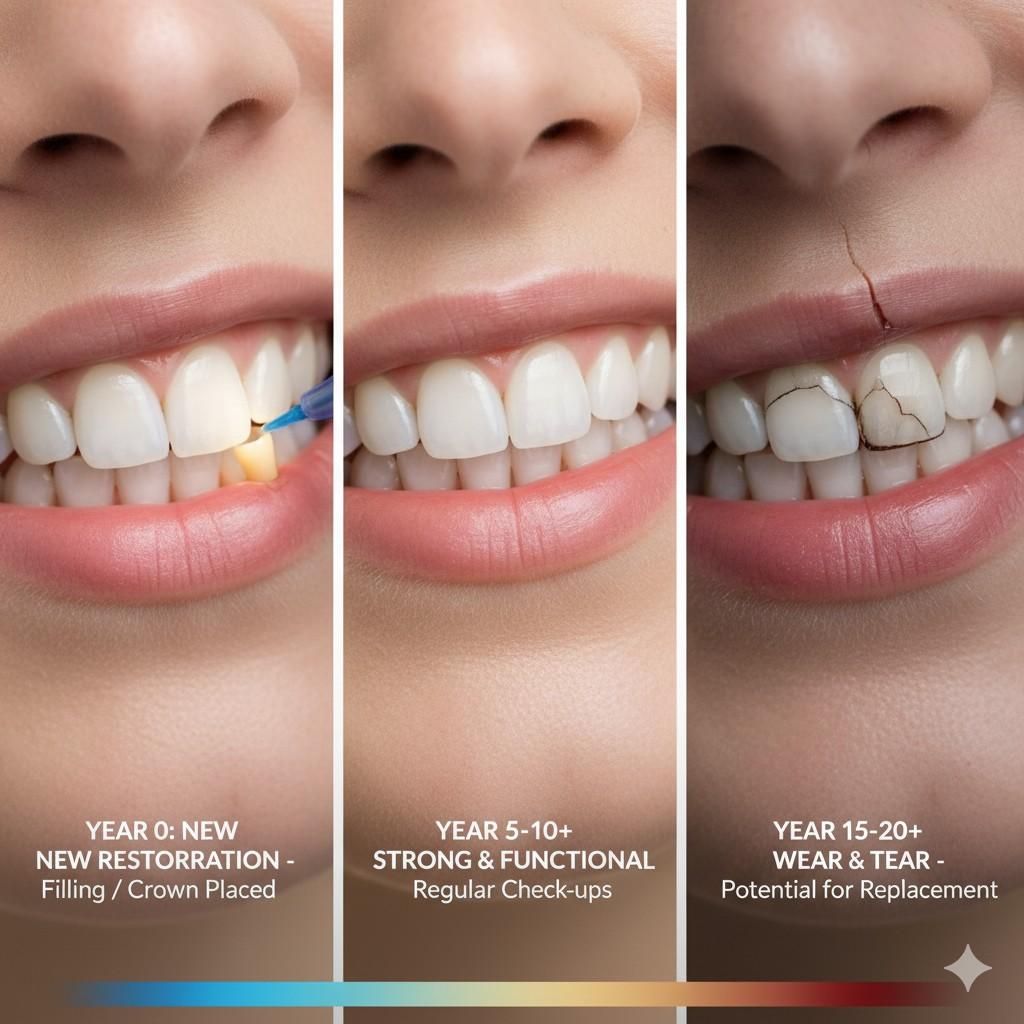
Dental fillings and crowns are durable solutions for restoring teeth, but their longevity depends on material, placement, and oral care. Fillings can last anywhere from 5 to 15 years, while crowns can last 10 to 20+ years. Proper hygiene, regular dental visits, and mindful habits can maximize their lifespan.
At Arlington Dental, we help patients maintain their dental restorations with personalized care and advice. By taking proactive steps at home and seeking professional guidance, you can ensure your teeth remain healthy, strong, and functional for years to come.
Schedule your appointment today to learn more about preserving your fillings, crowns, and overall oral health.